2026 Toyota RAV4 Limited Hybrid AWD: America's Best-Selling SUV Grows Up
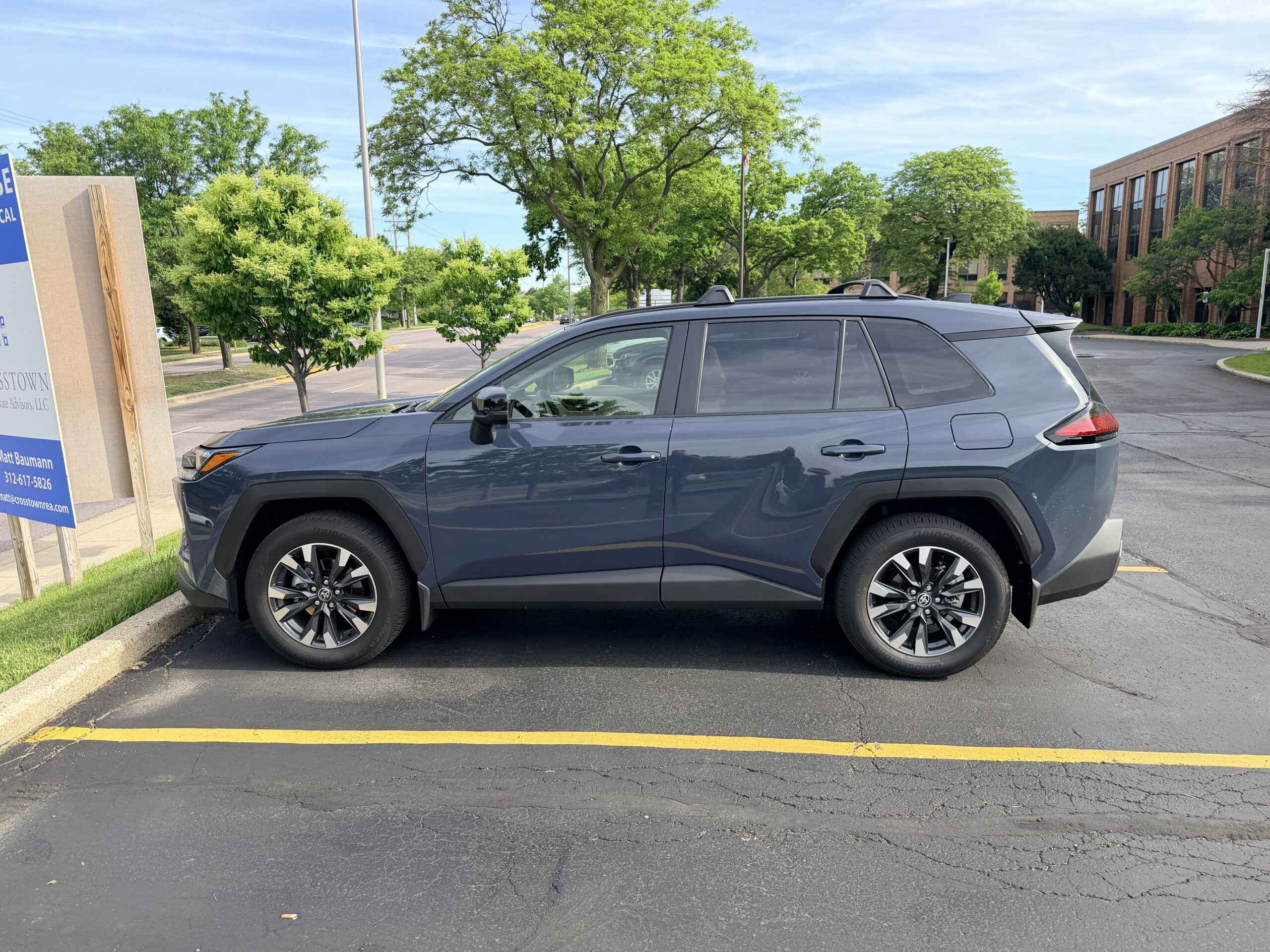
The Toyota RAV4 has come a long way since it first arrived in the United States for the 1996 model year. Back then, it was something of an oddball—a compact, car-like SUV that prioritized fuel economy and everyday drivability over off-road prowess. Today, the RAV4 isn’t just mainstream; it’s America’s best-selling SUV, regularly outselling nearly every passenger vehicle on the market except full-size pickup trucks. The all-new 2026 Toyota RAV4 Limited Hybrid AWD demonstrates why the nameplate has remained at the top of the sales charts while adding enough technology to remind you that the automotive world is changing rapidly.
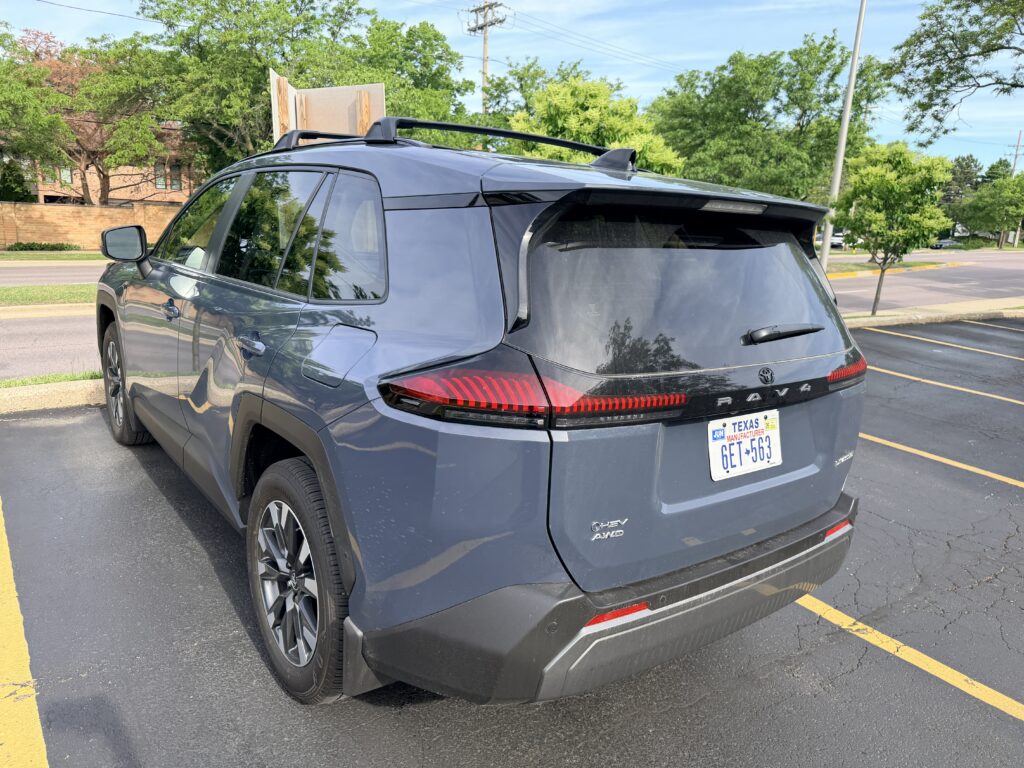
The Limited Hybrid AWD sits near the top of the RAV4 lineup, with a suggested retail price of $43,300 before destination charges. The test vehicle carried a total MSRP of $46,883 after adding options including a head-up display ($600), carpeted floor and cargo mats ($339), mudguards ($160), door sill protectors ($199), wheel locks ($90), rear hatch cargo lamps (a whopping $425 for something that should be standard on the Limited trim), and low-profile roof cross bars ($320). Destination is a sadly-now-mainstream $1,450. It also delivered an EPA-estimated 41 mpg combined (43 city/37 highway), a remarkable figure for an all-wheel-drive compact SUV loaded with comfort and technology.
Toyota has wisely avoided reinventing the formula. The RAV4 remains practical first and foremost, with generous passenger space, excellent outward visibility, and cargo capacity that makes it equally comfortable hauling groceries, luggage, sports equipment, or home improvement supplies. My golf clubs fit well on an angle or straight in after lowering one of the rear seats. Hybrid power only enhances the experience, delivering brisk acceleration while making fuel stops less frequent. With gas over $4/gal during my loan, the smoothly operating hybrid running on 87 octane gas starts looking like a real winner.
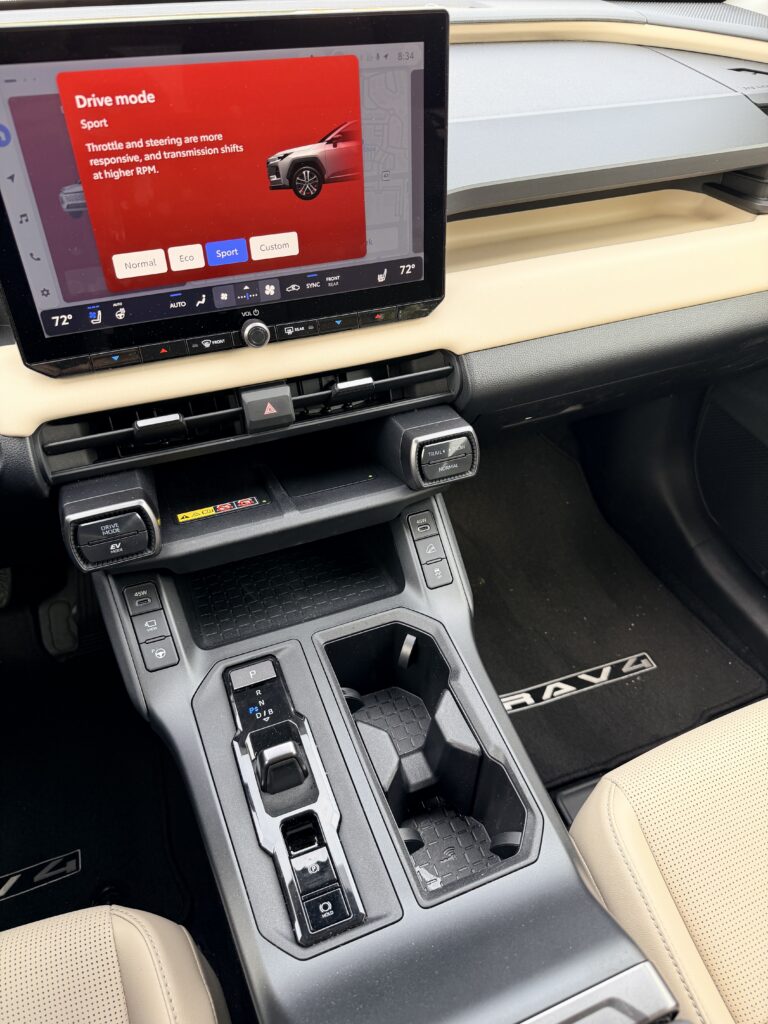
For a driving enthusiast, the RAV4’s dynamics can seem a little lackluster. Most of that is owing to its CVT transmission that, while much improved over earlier iterations (especially Nissan’s), still doesn’t tickle the fancy of anyone who enjoys a twisty, back country road. Its design does, however, provide instant torque and power when passing on a highway, so power is not the issue. Total combined power is 236hp with the AWD system, with torque measuring only 163lb-ft, but we swear the CVT makes it feel a lot more powerful than that. We’re just nostalgic for the sound and feeling slamming through gears as we wring out a car’s performance, and while “Sport Mode” does seem to provide more feedback and a snappier throttle, software can only do so much.
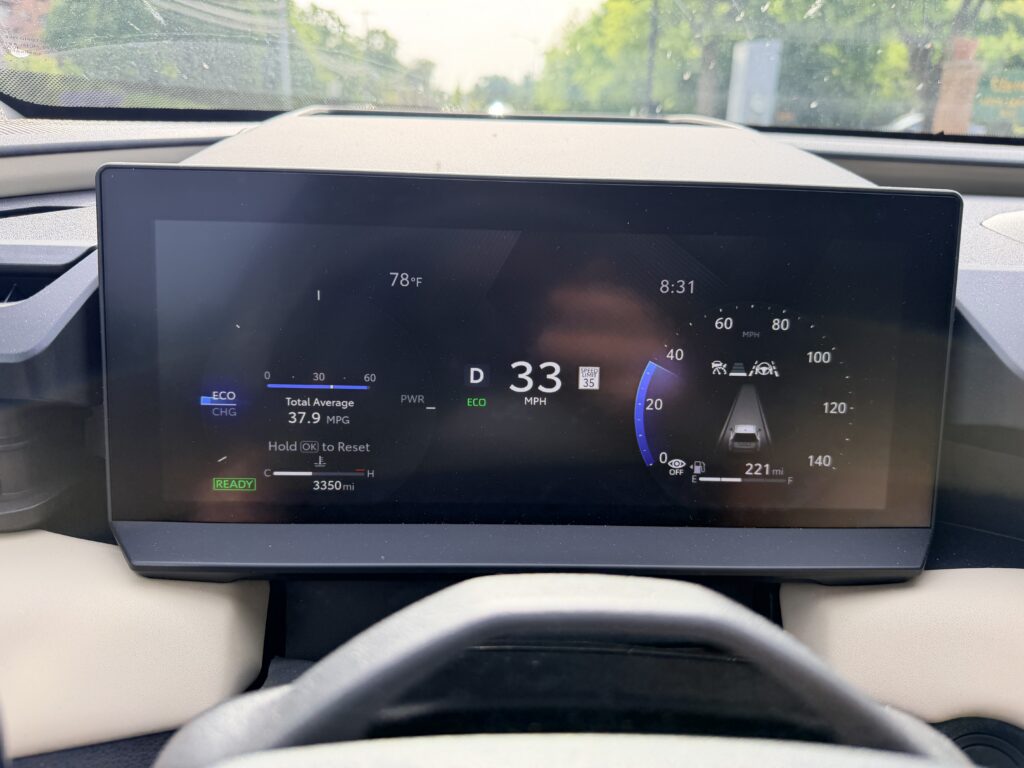
For quite some time now, Toyota has been the world standard for hybrid cars, and the smooth hybrid integration here is no exception. So while you might lament the loss of snapping through a traditional gearbox, sit back in your RAV4 and enjoy the instant (and plentiful) power when needed and skip the gas pumps often.
Moving inside, the 2026 RAV4 represents a significant leap forward.
Toyota’s next-generation Audio Multimedia system is faster, more intuitive, and built around voice control. The “Hey Toyota” virtual assistant can answer questions, adjust climate controls, provide navigation assistance, and even handle simple commands like changing the music or reporting the remaining driving range. The interface feels modern without becoming overwhelming, and customizable home screen widgets allow drivers to prioritize the information most important to them.
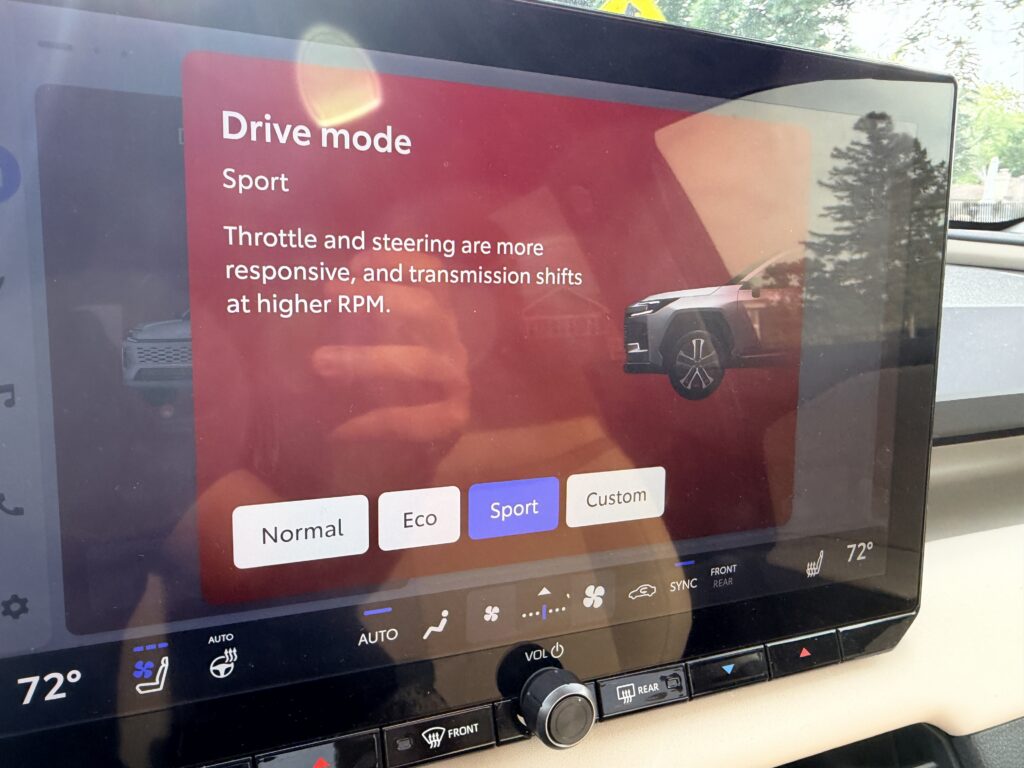
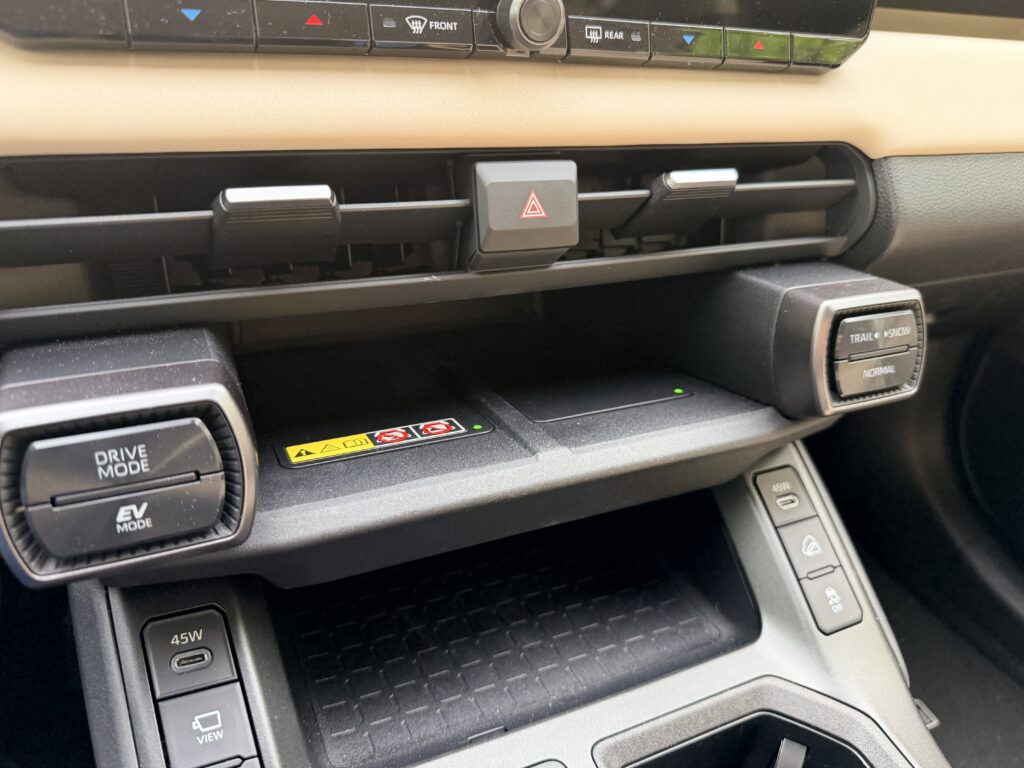
Cloud-based navigation now integrates directly into the 12.3-inch digital instrument cluster, putting turn-by-turn directions directly in the driver’s line of sight. Wireless Apple CarPlay and Android Auto remain available, while Spotify integration and SiriusXM with 360L provide plenty of entertainment options for subscribers. Toyota’s updated multimedia system feels competitive with the best offerings from Hyundai, Honda, and Ford rather than merely adequate, something that hasn’t always been true of Toyota infotainment systems. My only issue was that the wireless charging shelf does not allow you to see if the phone is actually charging and its design means you will frequently forget to take your phone with you. A little reminder in the dash – a la VW – to “not forget your phone” would actually be useful here.
One of the most intriguing additions is something every automaker should seriously consider copying: a built-in dash camera.
Toyota calls it Drive Recorder, and it comes standard across the 2026 RAV4 lineup. Unlike aftermarket dash cams that require wires running across the windshield and separate power supplies, Toyota’s system uses the vehicle’s existing cameras to continuously record video, save clips during sudden braking or steering events, and even capture panoramic views on appropriately equipped models. Drivers can adjust the sensitivity for automatic recording and export clips using a USB flash drive. In an era when dash cam footage increasingly settles insurance disputes and captures everything from hit-and-runs to unusual roadside encounters, integrating the technology into the vehicle simply makes sense.
Unfortunately, I wasn’t able to evaluate the system during my time with the vehicle. Activating and fully accessing the feature requires the eventual owner to register the vehicle through Toyota’s smartphone app, something that understandably isn’t practical for a short-term press vehicle. That’s disappointing because it appears to be one of the RAV4’s standout features.
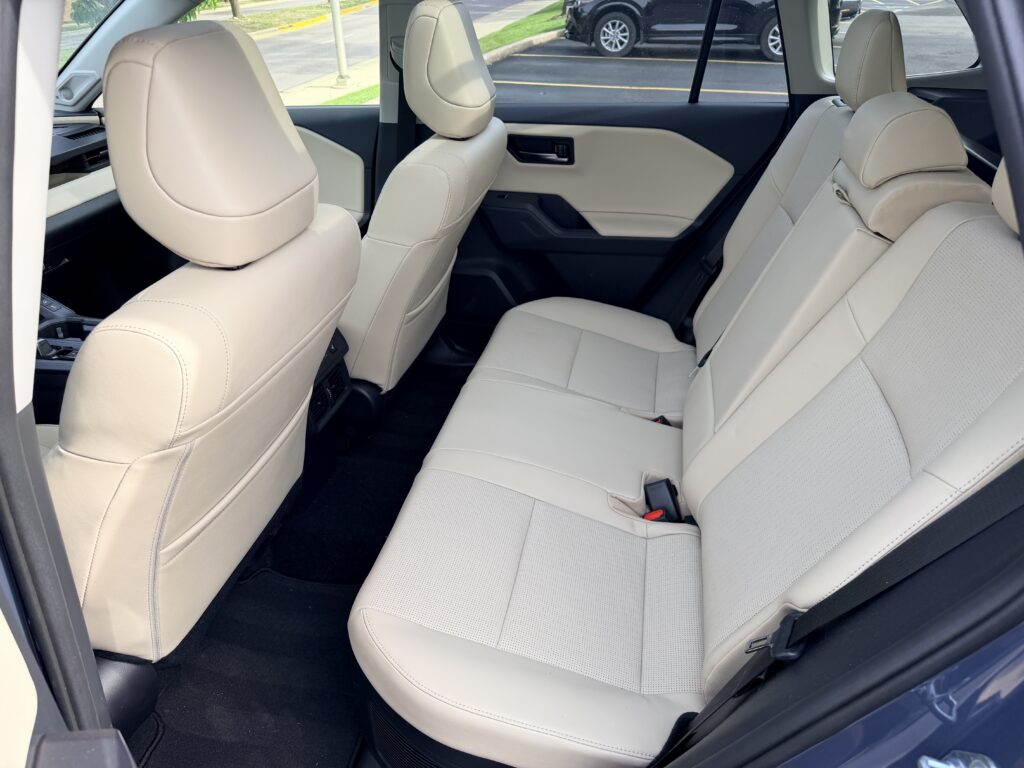
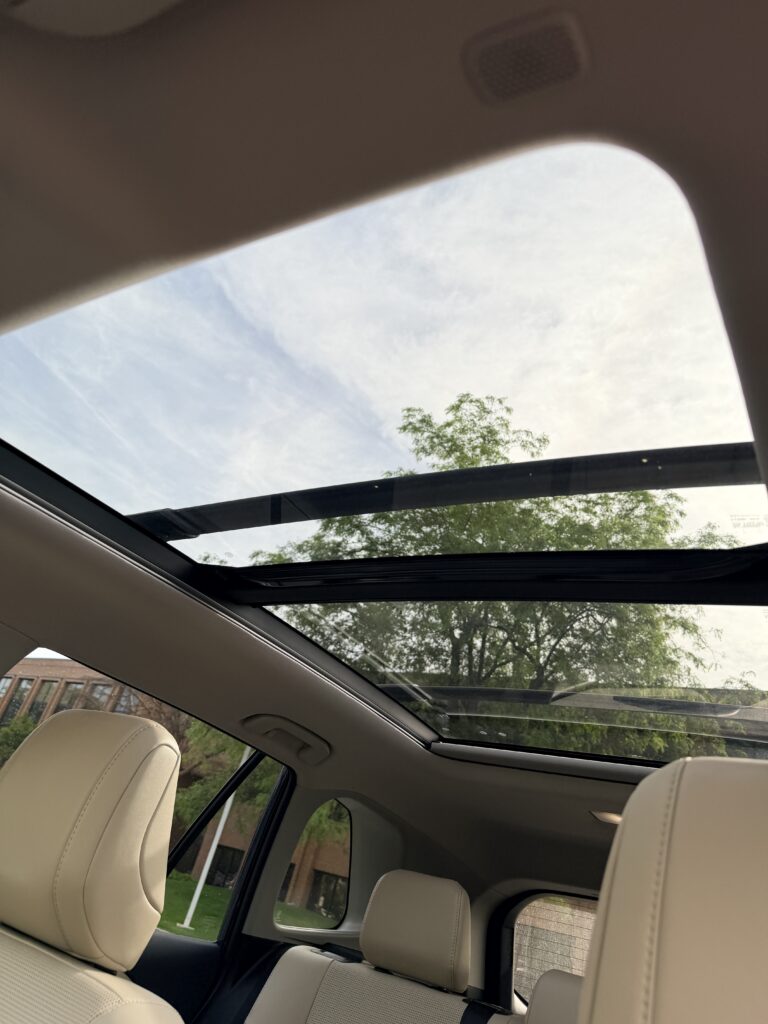
The seats are very comfortable and covered with Toyota’s “SofTex” trim that mostly feels like leather. The star feature is the panoramic sunroof, which came standard on our Limited.
If there’s one aspect of the RAV4 that occasionally crosses the line from helpful to irritating, it’s the seemingly endless stream of electronic chimes and beeps.
Lock the doors—multiple beeps.
Unlock the doors—multiple beeps.
Walk away while the vehicle is running—beep.
Open a door with the key in your pocket—beep.
Start the vehicle without first putting on your seatbelt—another warning chime.
Shut it off—yet another alert.
Modern vehicles increasingly rely on audible notifications to communicate everything from safety reminders to simple confirmations, and the RAV4 is certainly not alone. Still, after several days behind the wheel, I often found myself wondering exactly what each particular sequence of tones was trying to tell me. Some confirmed successful actions, others warned about conditions that weren’t immediately obvious, and a few simply became part of the background soundtrack of ownership. I’m sure longtime owners eventually learn the language of Toyota beeps, but newcomers may spend their first few weeks wondering whether they’ve done something wrong or whether the vehicle is simply being extra communicative.
Fortunately, those constant reminders don’t detract from what the RAV4 does best.
The hybrid powertrain is smooth and refined, seamlessly transitioning between gasoline and electric power without drawing attention to itself. All-wheel drive provides extra confidence in poor weather without imposing a significant fuel economy penalty, while the suspension strikes an excellent balance between comfort and control. Road noise is well managed, the seats remain comfortable over longer drives, and the cabin feels appropriately upscale for a vehicle wearing the Limited badge.
Toyota also continues to emphasize safety, equipping the RAV4 with a comprehensive suite of driver assistance technologies designed to reduce driver fatigue and help avoid collisions. Combined with its excellent fuel economy, strong resale value, and reputation for long-term reliability, it’s easy to understand why so many buyers continue returning to the RAV4 generation after generation.
Three decades ago, the original RAV4 helped invent the modern crossover SUV. Since then, nearly every manufacturer has followed Toyota’s blueprint. The 2026 RAV4 Limited Hybrid AWD doesn’t attempt to shock buyers with radical styling or gimmicky features. Instead, it carefully refines a formula that has already proven enormously successful, adding meaningful technology like the integrated dash camera, vastly improved infotainment, and excellent hybrid efficiency.
Even if you’ll probably never figure out exactly what all those beeps are trying to say.
Share